
The 2026 Coachella Music Festival stood apart from previous years, not just for its lineup, but for the cultural force that reshaped it. Driven by one of the most dedicated fanbases in music, the event was unofficially rebranded by attendees as “Bieberchella,” reflecting the major impact of Justin Bieber’s return to the stage.
At a time when much of the retail sector is facing headwinds, this moment highlights a striking contrast.
According to McKinsey & Company’s State of Fashion 2026 Report, the global fashion industry is expected to grow in the low single digits, constrained by macroeconomic instability, tariff pressures, and increasingly value-conscious consumer behavior. In other words, demand remains soft across much of traditional retail.
Yet one category continues to defy that trend: artist-driven merchandise.
Justin Bieber’s record-breaking return to Coachella
After nearly four years away from touring following his “Justice World Tour” in 2022, Justin Bieber returned as a headliner at the Coachella Music Festival on April 11, 2026.
The comeback was historic and delivered measurable impact.
Bieber became one of the highest-paid artists in the festival’s history, earning $10 million total for his roughly 90-minute sets at each of the two weekends, Rolling Stone reported. He also drove a surge in ticket demand, underscoring the scale of his global fanbase.
Coachella 2026 sold out all passes for both weekends within a week of the lineup announcement, according to the festival’s website.
But the most notable milestone didn’t happen on stage.
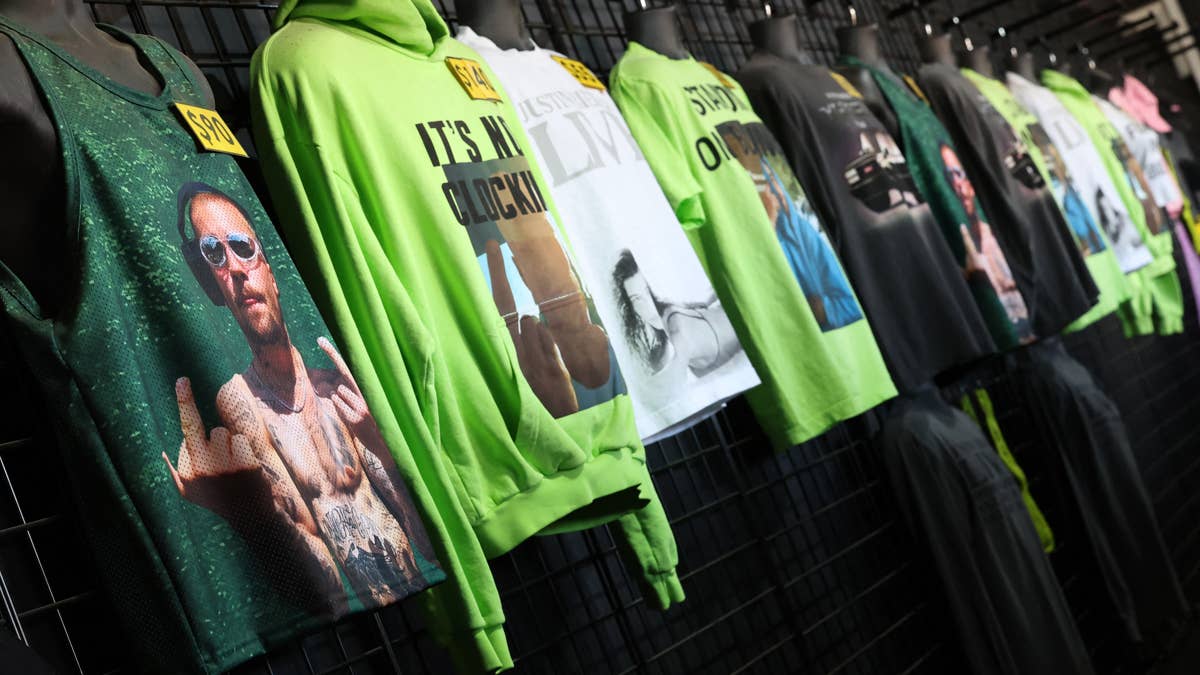
Skylrk generates over $5 million in one weekend
Bieber’s fashion label Skylrk generated $5.04 million in merchandise sales during Coachella’s first weekend alone. That figure surpassed the festival’s previous two-weekend combined merchandise record of $1.7 million, Skylrk told Vogue Business.
While official figures have not been disclosed, the results appear consistent with high-demand indicators, including sold-out merchandise on-site and online.
The distribution strategy played a key role. Merchandise was available through:
- Skylrk’s official website
- Coachella’s artist merch tent
- A dedicated Skylrk retail space next to the brand’s “Skylrk Oasis” activation
This multi-channel approach blended physical exclusivity with digital accessibility, capturing both impulse purchases at the festival and broader demand online.
Why artist merchandise outperforms traditional retail
Bieber is not the first to bring his own brand to Coachella. Travis Scott introduced his Cactus Jack label at the festival in 2025, according to the brand’s official Instagram post. But the scale of Skylrk’s success signals a broader shift.
Artist merchandise thrives because it operates differently from traditional retail. Its value lies less in the product itself and more in its meaning.
More coverage on celebrities and retail business:
- Bad Bunny’s bargain outfit breaks Super Bowl fashion tradition
- Another high-profile celebrity cosmetics brand closes
- Celebrity shapewear brand coming after Lululemon’s throne
Several key factors drive this performance:
- Identity and belonging: Fans use merchandise to signal affiliation with a community tied to an artist or cultural moment.
- Emotional connection: Music is deeply personal, often linked to memories and life experiences. Merchandise becomes a physical extension of that connection.
- Scarcity and exclusivity: Limited releases create urgency and increase perceived value.
- Direct artist support: Purchasing merchandise allows fans to financially support artists more directly than streaming, where revenue is fragmented.
- Social status: Owning rare or early-release merchandise can elevate status within fan communities.
Together, these dynamics transform merchandise from a transactional product into a form of identity and social currency, explaining why it continues to outperform broader retail categories.
The strategy behind Skylrk’s rapid rise
Bieber officially launched Skylrk in July 2025, but the brand’s rollout followed a long-term strategy. Development began in late 2023, and throughout 2024, he and his wife, Hailey Bieber, were frequently seen wearing the label, effectively building awareness before its formal debut.
The brand operates with a hybrid creative structure:
- Creative Direction by Neima Khaila
- Design by Finn Rush-Taylor
- Final creative control retained by Justin Bieber
This ownership model is significant. As Artist Manager Thomas Gutches told Forbes, “Merchandise is one of the few things an artist has complete ownership of. It is one of the few things record labels do not have control over in terms of cross-collateralization.”
Performance metrics extend beyond direct sales:
- Skylrk generated $2.3 million in media impact value (MIV), according to Launchmetrics.
- The brand saw over 3% growth on social media following Coachella weekend one, per Metricool.
- Skylrk’s Instagram following reached 785,000, compared to Justin Bieber’s 292 million.
What brands and artists can learn from Skylrk
Skylrk’s success offers a clear blueprint for both emerging artists and established brands.
- Audience outweighs product: A highly engaged fanbase can elevate products into high-demand assets.
- Cultural timing drives conversion: Limited releases tied to major events, like Coachella, create urgency that traditional retail cycles often lack.
- Ownership unlocks revenue: Merchandise remains one of the few areas where artists can control both margins and messaging.
AJ Lindenbaum, Artists Business Development Manager at Manifactor, explains that merchandise is no longer optional for artists; it is essential for income stability.
“Merchandise offers a lucrative avenue for artists to supplement their earnings, ensuring a more stable and diversified revenue stream in the highly competitive and rapidly changing music industry,” said Lindenbaum.
What this means for the future of retail
While much of retail continues to navigate uncertain demand, artist-led brands like Skylrk are demonstrating a different model, one built on community, cultural relevance, and direct-to-consumer engagement.
As Coachella’s second weekend unfolds, Skylrk is expanding its online availability beyond festival attendees, a move that could significantly extend its sales momentum.
If the first weekend is any indication, “Bieberchella” may be more than a fan-given nickname; it may signal a broader shift in how culture, commerce, and fandom intersect in the modern retail landscape.
Related: 72-year-old mall retailer to close more stores in 2026